Summary Notes of Elbert County Transportation Master Plan Public Meeting of September 17th, 2007
Richard Miller, Elbert County Planning Director introduced members of his staff who were in
attendance as well as Commissioner John Metli. Elbert County staffers who attended were:
Carolyn Parkinson- Elbert County Planning Dept.
Rick Manyik- Elbert County Road and Bridge Superintendent
Denny Van Why-Elbert County Office of Emergency Management
Richard introduced the team from Carter & Burgess:
Karen Stuart- Municipal and County Services Specialist
Scott Jones- Transportation Planner
Misty McCoy- Environmental Planner
This meeting was held in the Elizabeth Middle School. There were about 40 people in attendance. [Read more…]
Close The U.N.
By INVESTOR’S BUSINESS DAILY | Posted Monday, September 24, 2007 4:20 PM PT
The World Stage: Iran’s Mahmoud Ahmadinejad denies the Holocaust, sponsors terrorism and colludes in the murder of American troops. So why is he given the honor of addressing the United Nations on U.S. soil? To us, the answer is clear. The U.N. is as corrupt, brutal and morally compromised as Ahmadinejad himself. In its many affronts to civilization and decency, the U.N. has long since outlived its usefulness and reason for being. Time to shut it down. [Read more…]
don’t tase me funding bro
strange bedfellows
Going protectionist over a fantasy highway
Xenophobes see a threat to U.S. sovereignty in a Texas freeway project that would ease trade with Mexico.
By Shikha Dalmia and Leonard Gilroy September 20, 2007
With respect to conservatives, each one of the following ad hominem abusive adjectives was used in the above linked story:
paranoid, isolationist, jihad, sinister, xenophobes, apoplectic, paranoid rantings, protectionist fringe, hysterical, atavistic, ideologues of fear
This article is about Ports to Plains, a subject in which the TRW claim expertise.
Necessity makes for strange bedfellows though. The above authors are affiliated with the Reason Foundation, a group of Libertarians that a couple of TRW Democrats would probably find disagreeable.
As for Dalmia and Gilroy of the Reason Foundation, their opinions might be more persuasive without the ad hominems, and with a lot more “reason.”
Colorado


.
.
.
.
where’s the beef
 The group who attend each planning commission meeting to lobby against development and growth, yet who never manage to persuade the planning commission or the BOCC to see things their way, should consider why they are ineffective in stopping growth. There are only two reasonable explanations. Either they are, in themselves, poor representatives, or they in fact, do not represent a majority of citizens.
  These periodic laments in the local fishwrap reinforcing a self-image of heroic victims of the money-grubbing enviro-stomping capitalist development nightmare, may comfort some people, but this position leads to only one conclusion –total obstruction. Cobbles of “smart” to growth, “health and well being” to environment, “unique” to Elbert County, and “commitment” to the future, all make nice sound bites, but from a bunch of folks with self-proclaimed vision, I would expect a little more discussable content. Slogans are just not persuasive.
atheism unknown there
“The almost general mediocrity of fortune that prevails in America obliging its people to follow some business for subsistence, those vices, that arise usually from idleness, are in a great measure prevented. Industry and constant employment are great preservatives of the morals and virtue of a nation. Hence bad examples to youth are more rare in America, which must be a comfortable consideration to parents. To this may be truly added, that serious religion, under its various denominations, is not only tolerated, but respected and practised. Atheism is unknown there; infidelity rare and secret; so that persons may live to a great age in that country, without having their piety shocked by meeting with either an atheist or an infidel. And the Divine Being seems to have manifested his approbation of the mutual forbearance and kindness with which the different sects treat each other, by the remarkable property with which He has been pleased to favor the whole country.”
From: Information To Those Who Would Remove To America, Benjamin Franklin, 1794
Note the date –1794, well after the 1st Am “Establishment Clause” was argued and ratified by the States along with the Constitution. Jefferson’s notion of a “Wall of Separation” between church and state came about almost a decade later, yet it is that expression to which revisionists refer to make the erroneous point that the Constitution contemplated the protection of beliefs repugnant to Christianity. The “different sects” Franklin refers to were all Christian, and that’s the context in which the Establishment Clause was ratified. The modern context of tolerance toward atheism and “infidel” non-Christian religions would have offended the Founding Fathers. Under an originalist constitutional interpretation, the Establishment Clause would not protect, for example, the practice of Islam. Protections the Court has found over the years in the cascade of constitutional interpretation, can, with the stroke of a pen, be taken away. In effect, what some claim as a fundamental right, is little more than a revocable license.
the incredible bread machine
 (click to enlarge)
The Incredible Bread Machine by: R.W. Grant
also by R.W. Grant: Keepers of the Flame
.
rainbow steer

.
.
.
.
(click to enlarge)
Goodman sums it up
“In all of social science – whether economics, politics, sociology, history, etc. – there is only one model that (a) is internally consistent and (b) can explain and predict. That is the model developed by economists. All the rest is gobbledygook. And more often than not, it is highly opinionated, value-laden gobbledygook.”
Economic theory predicts that in any system in which all the actors find it in their self-interest to overuse resources, fail to improve quality and impede access to care, there will be system-wide problems of cost, quality and access. And this prediction holds not just for the United States, it holds for the health care systems of Britain, Canada and other countries as well.
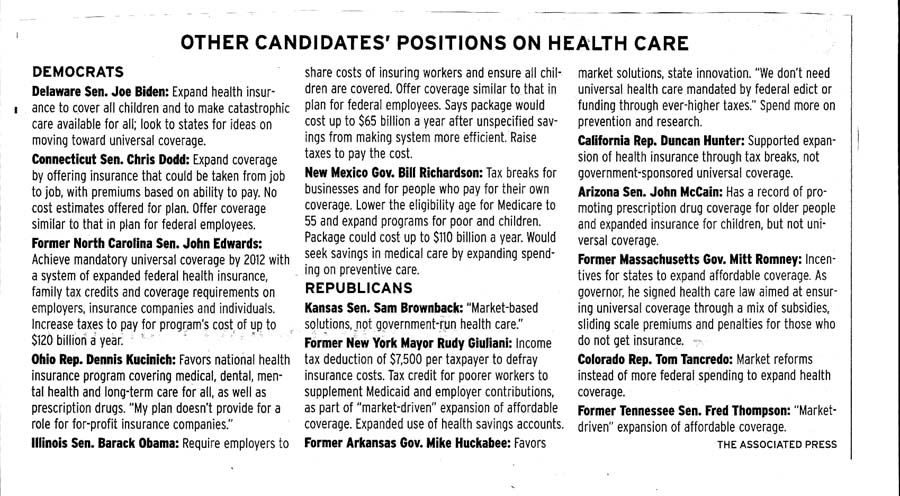
candidate’s health care plans

consumer-driven health care
From: Forbes Commentary By: Regina Herzlinger
09.04.07, 6:00 PM ET
We have turned over $2.2 trillion of our money to those who manage our health care, without holding them accountable. Not surprisingly, these folks–hospitals, insurers, governments–used the money to benefit themselves.
Insurers, hospitals and governments have gotten fat–our bloated health care costs kill the competitiveness of U.S. firms and more than 40 million people are uninsured, mostly because they cannot afford it–while 300,000 people die every few years from medical errors. Arrogant insurance bureaucrats deny people the services they paid for, while many insured find their coverage inadequate for serious illnesses. The uninsured who are charged the very highest prices by our nonprofit, ostensibly “charitable” hospitals are all too often driven to bankruptcy.
Meanwhile, doctors leave the profession in droves because of insurer, hospital and government micromanagement of their activities. Most of the doctors enrolled in my Harvard Business School M.B.A. courses explain, “I can no longer practice medicine.” The powerful grip of the status quo also scares off the entrepreneurs who represent the best hope of transforming this whale.
Only two stakeholders can fix this–you and I. We must take back our money and we must decide how to spend it. We should be buying health insurance for ourselves, using the foregone salaries and mammoth taxes we once turned over to this self-serving crew. Switzerland’s consumer-driven health care system points the way: The Swiss have universal coverage, spend 40% less and enjoy an excellent, private health care system.
We are in a war for control of $2.2 trillion. If we do not win it, our health and economy will go up in flames.
Regina Herzlinger is the first woman to be awarded tenure at the Harvard Business School as the Nancy R. McPherson Professor of Business Administration. Her new book, Who Killed Health Care? (McGraw-Hill), details the consumer-driven battle plan that can revive our doctors, economy and good health.
misrepresenting Clark lead study
traffic counts
sunrise – upper limb

.
.
.
.
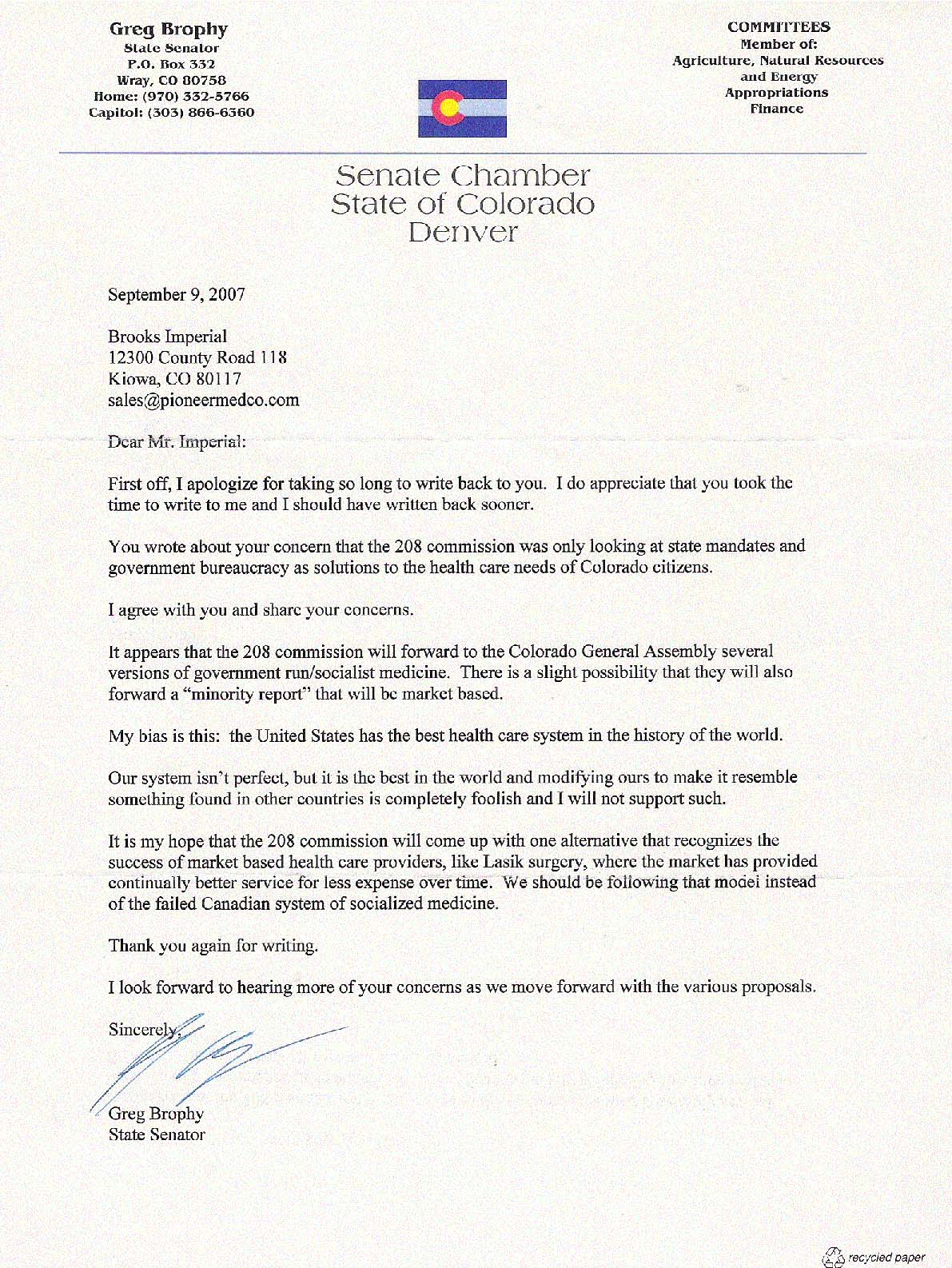
Sen Brophy on 208
9/11 thoughts
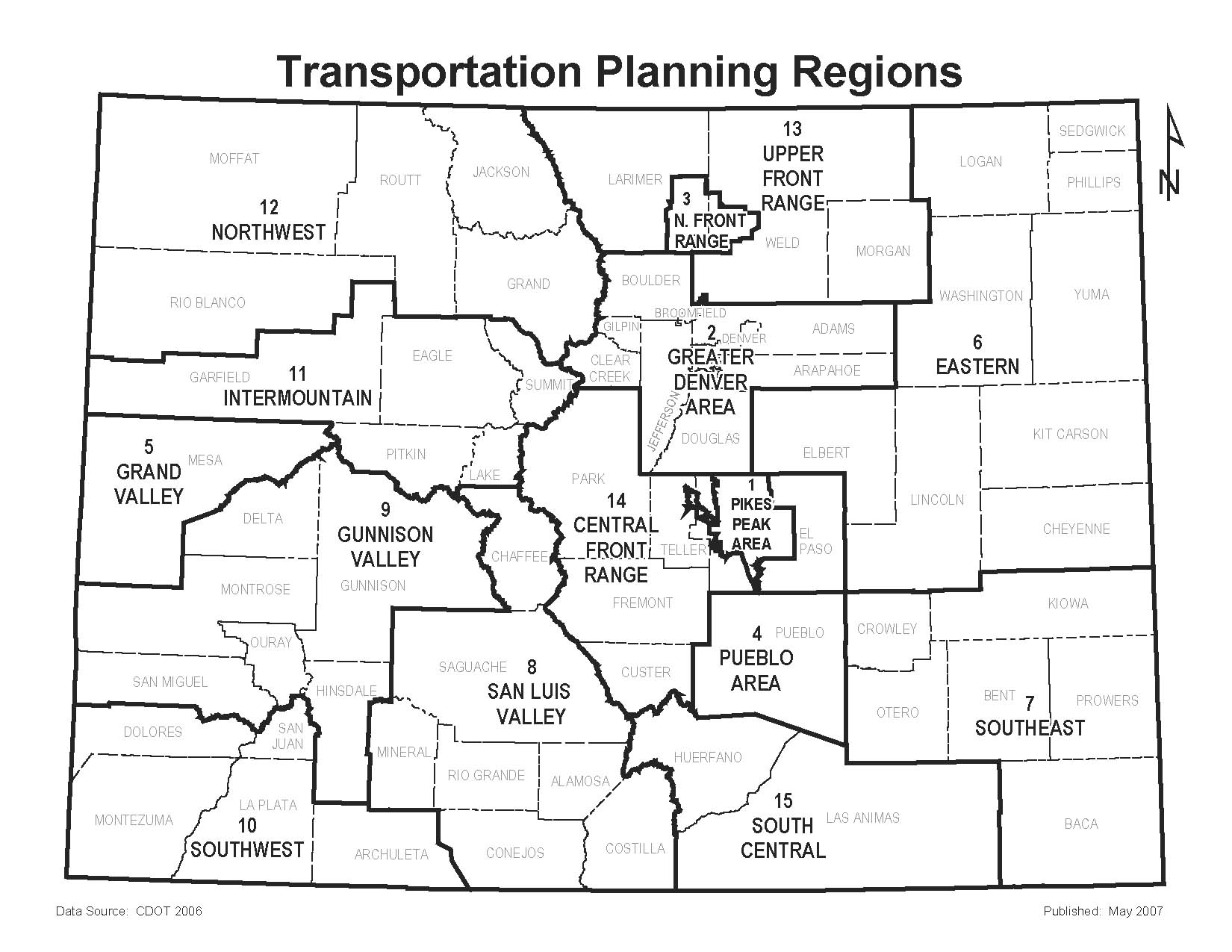
CDOT planning regions
sunsets


.
.
.