When you least expect it, the most interesting revelations surface. I was discussing some fundamental differences between my positions and positions of the left with some Democrats yesterday. As usually happens in these situations, they grew increasingly impatient with me as I defended my position from compromise. As we parted, they made a reference to their firmly held belief that the French Revolution was the logical outcome of Laissez Faire capitalism. They all held this conclusion as if it were fact, and they tossed off questions to this assumption as they departed as absurd. [Read more…]
no easy answers
Candidate Robert Thomasson
advocates “Smart Growth” for Elbert County, an “urban planning and transportation theory that concentrates growth in the center of a city to avoid urban sprawl; and advocates compact, transit-oriented, walkable, bicycle-friendly land use.” It’s difficult to imagine “walkable, bicycle-friendly” corridors that would be practical over the distances in Elbert County.
Candidate Andy Wyer
believes “managed growth is designed to preserve the rural life style and quality of life that we all enjoy in Elbert County.” “Growth management is a set of techniques used by government to ensure that as the population grows that there are services available to meet their demands. These are not necessarily only government services. Other demands such as the protection of natural spaces, sufficient and affordable housing, delivery of utilities, preservation of buildings and places of historical value, and sufficient places for the conduct of business are also considered.
One technique is the imposition of impact fees. Impact fees are imposed to charge the owners of newly developed properties for the “impact” the new development will have on the community. Fees can be used for such things as transportation improvements, new parks, and expansion of schools. Impact fees are not used to maintain existing facilities, but instead are used to create new facilities in proportion to the number of new developments in the area.
Another technique is application of zoning to reduce the cost of service delivery. Zoning can be used to reduce the area affected by urbanization, allowing the same number of people to live and work in a smaller area, allowing services to be delivered more efficiently. For example, grocery stores and pizza delivery businesses can service only a limited area. If more customers are located within their service delivery area, the cost of delivering their services is decreased.
Preventing suburban densities from affecting a large area also has the effect of providing open spaces so that people who wish to live in a rural setting can do so without urbanization threatening their lifestyle.
The application of growth management techniques are often governed by the development of a comprehensive plan. The plan can be used to measure the impact that new growth will have on the community and define the method by which that impact is mitigated.”
Candidate Steve Valdez
would “plan and manage Elbert County’s growth with smart and proven policies.”
Candidate John Shipper
would “plan and manage growth compatible with a rural lifestyle.”
Put Mr. Valdez and Mr. Shipper in the “managed growth” camp with Mr. Wyer.
All this planning chutzpa begs a great big question. What have managed growth and smart growth planning theories accomplished in Elbert County to warrant such devotion? Answer: nothing – not a damn thing.
Elbert County town centers have minimal economic activity. The Elbert County Fair gets smaller each year. Our road network is in poor condition and does not promote efficient transits of the county. Our schools are producing historically low performance measures, enrollments are shrinking, teachers are leaving, and students are fleeing to Douglas County schools. Commercial enterprises have been closing faster than they are opening, and landowners are prevented from engaging in development that could bring economic returns to the county. Economically, Elbert County is hobbled, and at least four commissioner candidates, apparently, like things that way.
We don’t need their focus on the past, their myths about the rural life style and quality of life that need preserving. This quality of life is not worth preserving. It is poor and getting poorer. Oh, if you happen to work on or live near one of John Malone’s preserved ranches things might appear to look good, but that’s not because of anything produced here. The hobbies of one wealthy man don’t constitute a local economy.
We can and must build a much better quality of life with better infrastructure, efficient transportation corridors, desirable schools, businesses that produce goods and services for commercial markets, and opportunities for citizens to participate in economic growth. But these candidates, their myopic visions, the controls they would impose on us, and their master plans, will produce nothing. Elbert County needs opportunities of the sort that county government and Malone’s charity cannot produce. We have to do the hard work ourselves to build these things.
Elbert County citizens need to stop lapping up easy answers from planners. Master plan devotees have had over a decade to prove their worth in Elbert County and they failed miserably. New smart-growth and managed-growth master plans are no more than new lipstick on an old pig. They are not the answer. There are no easy answers.
progressive federal income tax
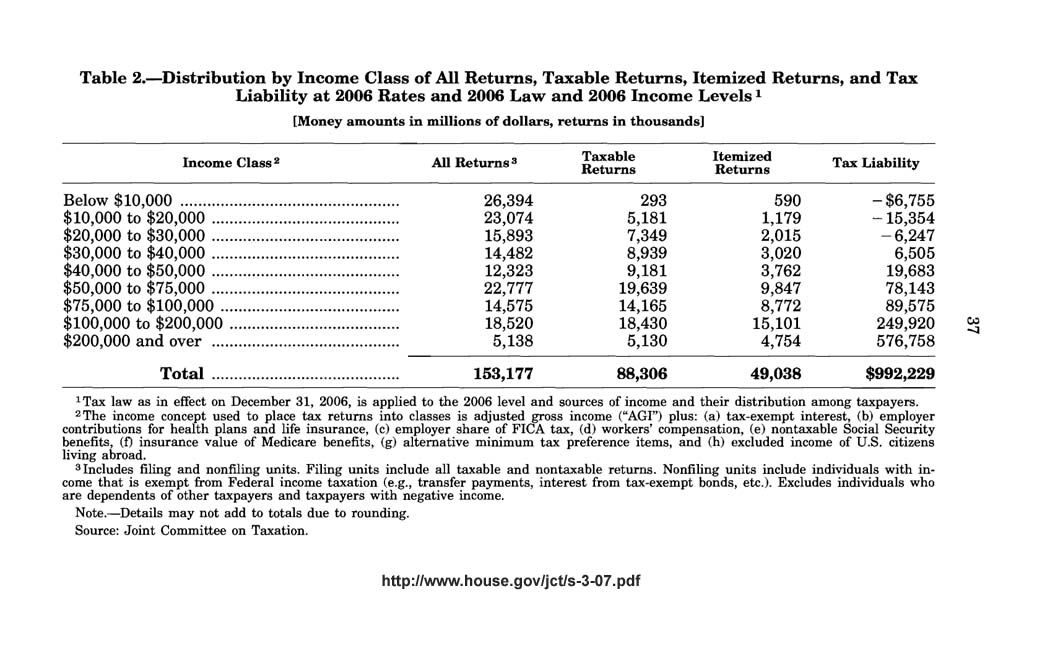
The top 2 income classes making $100,000 and up, comprise 15.4% of income tax payers, and pay 83.3% of federal income taxes.
Remember this next time the progressives talk about raising taxes on the rich. The rich already pay way more than their fair share, and that’s probably enough progress.
Source: U.S. Congress
lights out guilt
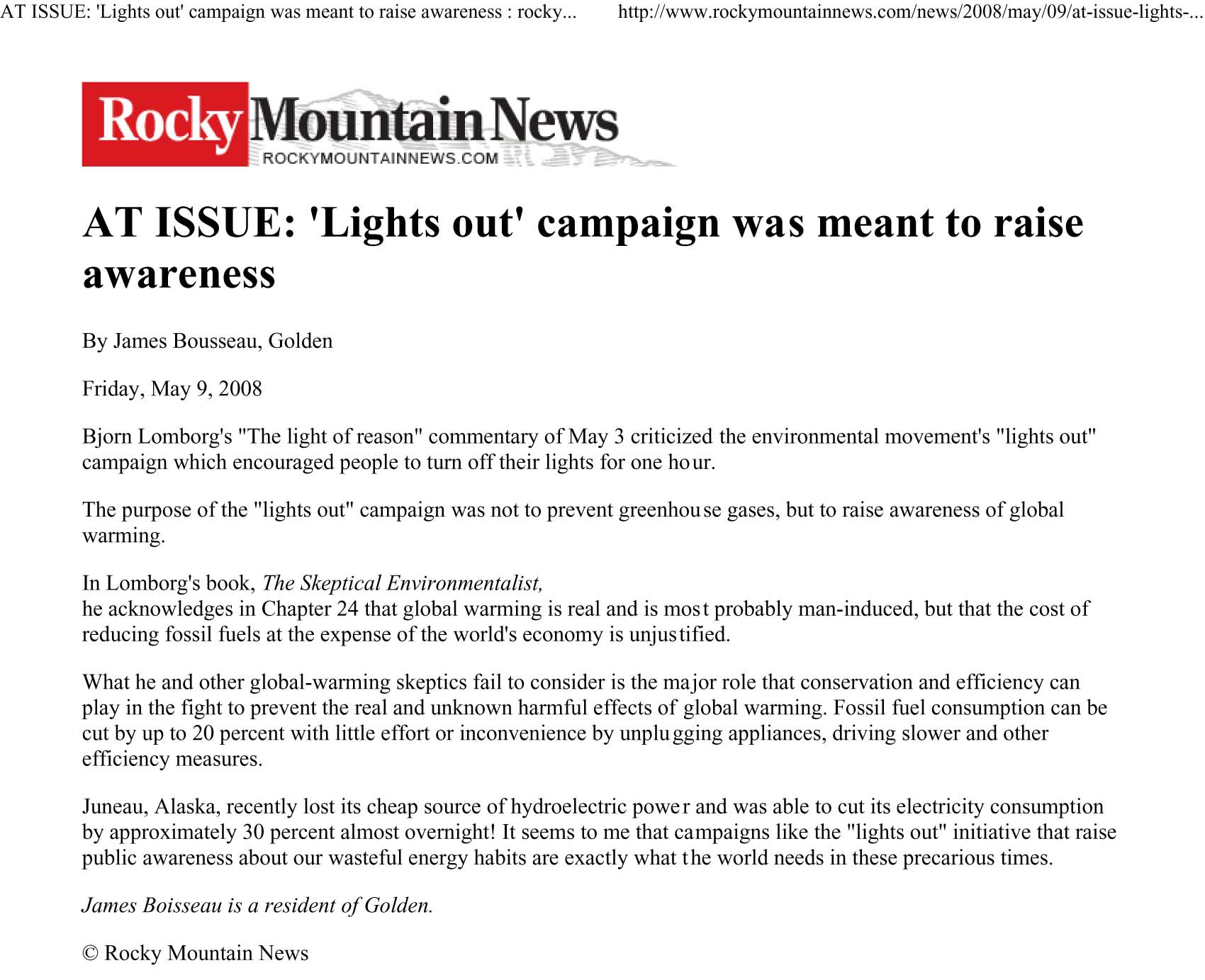
Mr. Boisseau of Golden needs to raise his awareness of the “Lights On” all over Asia. In building after building, block after block, mile after mile, and city after city of crowded Asia, the lights are all on at night. Buildings are covered in massive colorful light displays that outline the geometries of buildings, create interesting abstract shapes, and light the night for the sake of art and visual stimulation. Every night of the year the buildings of Asia light up. Are they wasting energy on a colossal scale that dwarfs conservation efforts in the U.S.? Absolutely! Are these societies “precarious,” to use Mr. Boisseau’s adjective? Well, their economies are growing like gangbusters with currencies making mince meat out of the dollar as they produce goods for the world and accumulate wealth. Years ago, a philosophy professor of mine characterized the West’s solution to economic scarcity as a “get more” approach, as opposed to the mentality of those with a zero-sum view of the world which he characterized as a “want less” approach. His point was that the first approach led to better societies and happier people. Today Asia follows what used to be the Western approach, while back home in the West the Boisseaus want us to feel guilty, wasteful, to accept inconvenience, to see our technology as having led us to precarious times, in sum, to “want less” instead of “get more.” This neo-Luddite claptrap never solved a real problem. Moreover, guilt tripping the West into saving a few pennies of energy while the rest of the world lives on an energy bender is absurd. It’s a perpetual guilt trip that can never resolve. How convenient for the Boisseaus of the world. Without doing or creating a thing, they get perpetual moral superiority.
How about we leave the lights on, study longer and harder, and create some real solutions.
food for oil
Let’s see. The price of oil and fuel went up sharply and Congress subsidized ethanol production. In the higher priced fuel market, a marginally profitable alternative energy source became more economical with a subsidy. Food became more expensive due to increased fuel costs plus increased scarcity. Now, the UN and others blame the U.S. for causing food shortages.
Like hell. Oil producers effectively encouraged the U.S. to become more energy self-sufficient and the U.S. responded by diverting food carbon into energy production. We have a classic example of unintended consequences beginning with the manipulation of energy prices.
Subsidy of alternative energy production is probably a mistake because subsidies hide real economics and distort profitability, however, the despots-R-us UN is delusional in blaming the U.S. for causing hunger.

———————————————————————————————————————–
democracy
“To a greater extent than is recognized, China may have more closely replicated the political ordering of events that unfolded in western Europe: An autocratic regime at first tolerates those economic relationships that are conducive to prosperity, and then uses its powers to preserve the gains in wealth from disruption and organized plunder. As the people grow more prosperous, democracy matures.” p. 337
“[T]he widespread and secure ownership of property is the sine qua non of prosperity.” p. 341
“Democracy is a consequence of prosperity, in other words, not its cause.” p. 334
The Noblest Triumph, Property and Prosperity Through The Ages, by Tom Bethell, 1998, ISBN 0-312-22337-4.
job outsourcing
I listen to Peter Boyles on KHOW some mornings and he frequently complains about jobs moving overseas. He objects to this practice, pointing out all sorts of negative consequences to America due to the loss of jobs. He admits that the jobs lost to foreign factories produce goods sold in American markets; that America is the primary source of demand for goods. According to Peter Boyles, lost jobs translate into fewer income earning opportunities so we go into debt to purchase the things we want. Of course we are also free to retrain ourselves, learn new skills for the jobs that remain, create new jobs, find new employment, and avoid debt financing. I expect more of this goes on than Peter Boyles would like to admit.
I part company from him strongly on [Read more…]
cedar point wind project
(click to enlarge)

.
.
.
.
.
Goodman’s Law
From Liberating The Supply Side by John Goodman
Ask yourself this question: If Blue Cross were paying all the drug bills, would Rx.com even exist today? Would Wal-Mart be offering $4-a-month prescriptions? Would Publix be giving away antibiotics for free?
The fact that there is the most price competition in the market for drug therapies and the least for hospital therapies is an illustration of Goodman’s Law, which says that innovation and entrepreneurship are inversely proportional to the degree of third-party payment.
1% sales tax ?
(click to enlarge)
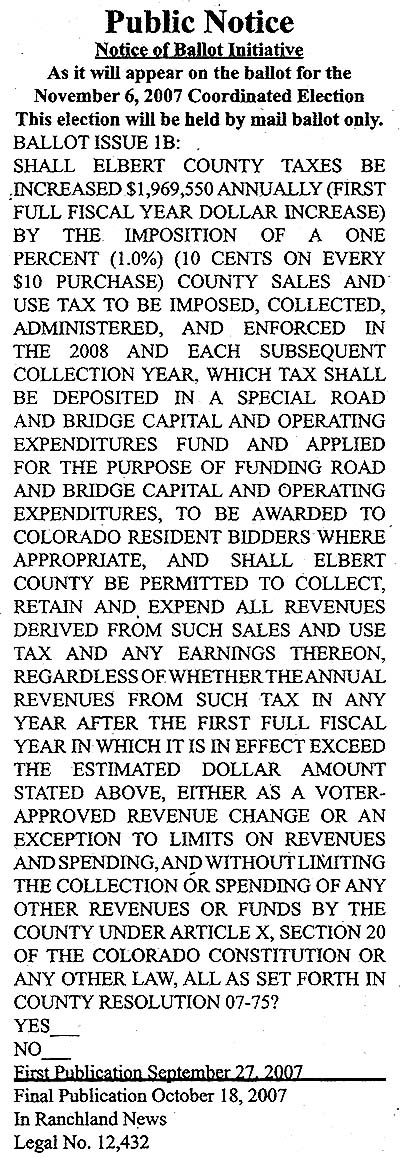
Estimated 1st Yr Sales Tax Revenue = $1,969,550
*2006 Road & Bridge Budget = $5,974,190
*2006 Total Budget = $23,690,529
.
.
1% sales tax = 33% increase in Road & Bridge budget.
1% sales tax = 8% increase in Total budget.
*See ELBERT COUNTY COMMISSIONER MEETING DECEMBER 13, 2006
Also: Don’t forget the Earmarked Money Illusion
the incredible bread machine
 (click to enlarge)
The Incredible Bread Machine by: R.W. Grant
also by R.W. Grant: Keepers of the Flame
.
Goodman sums it up
“In all of social science – whether economics, politics, sociology, history, etc. – there is only one model that (a) is internally consistent and (b) can explain and predict. That is the model developed by economists. All the rest is gobbledygook. And more often than not, it is highly opinionated, value-laden gobbledygook.”
Economic theory predicts that in any system in which all the actors find it in their self-interest to overuse resources, fail to improve quality and impede access to care, there will be system-wide problems of cost, quality and access. And this prediction holds not just for the United States, it holds for the health care systems of Britain, Canada and other countries as well.