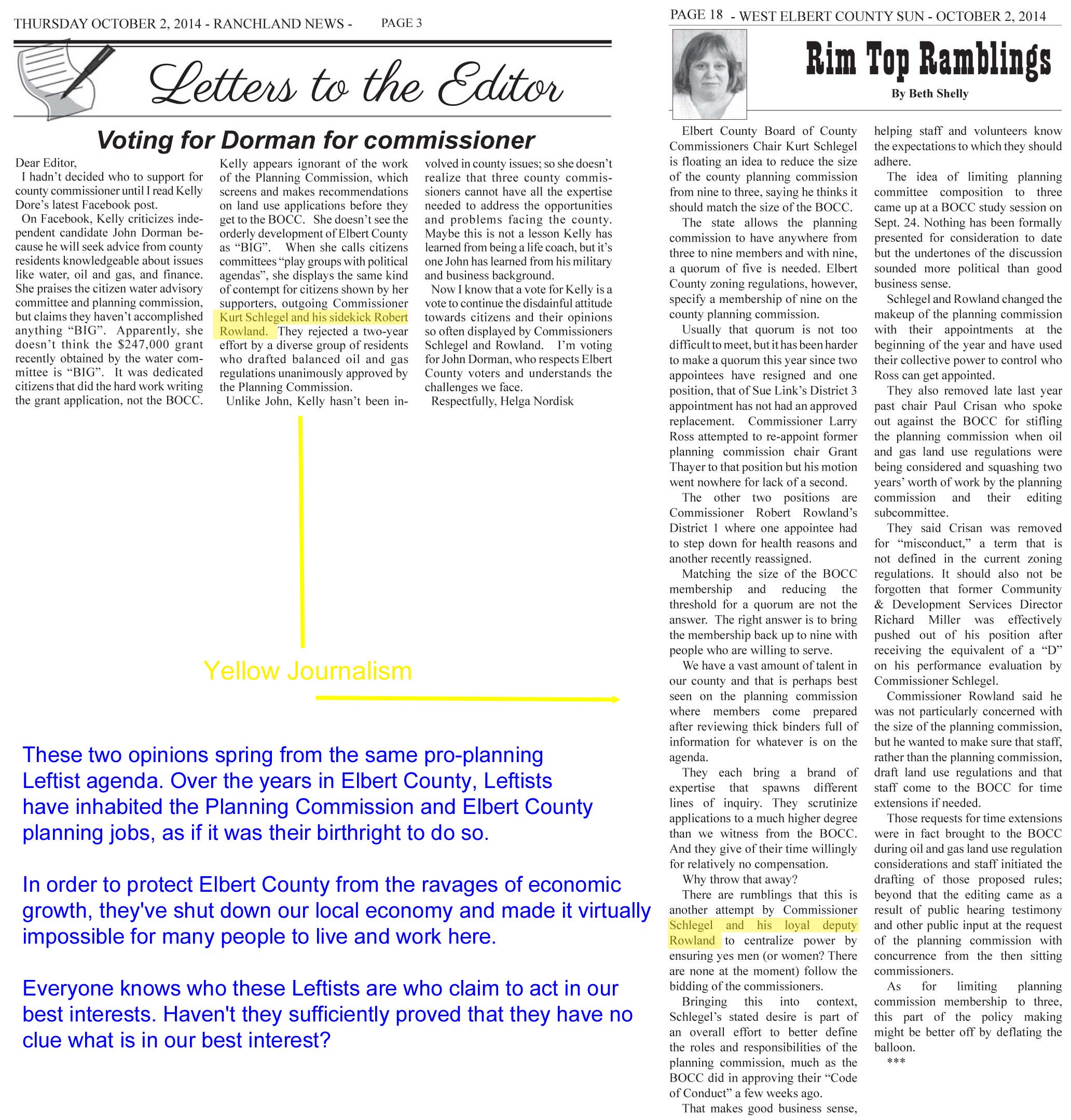
The Really Inconvenient Truths

“Marxism as a serious political system came crashing down with the Berlin Wall in 1990. Aspects of it certainly linger in European-style “social democracy” and in surviving elements of the New Deal in America.  Every time you suffer an energy blackout, for instance, you are probably suffering from the Depression-era laws that let to a fragmented electricity transmission grid in the name of preserving jobs.

Yet the instinct to broadly and aggressively apply the tools of Marxism–central planning and government control–lives on.  The instinct is the same as it was when Marx articulated it in the nineteenth century, but the old justification just doesn’t fly.  Free enterprise has proven itself not to oppress the working man, but to free him.

If the working man is no longer oppressed, the central tenant of Marxism no longer applies, but surely there must be another victim of capitalism to take its place?  Women and minorities have advanced themselves under free enterprise just as surely as have the working man, and so they are not ideal candidates.

Luckily for the Left they have a victim ready on the shelf.  This time it is one that will not exercise free choice in rejecting the ministrations of those who claim to speak for it.  In the leftist’s world view, the worker has been replaced by “the Environment.”

Iain Murray, The Really Inconvenient Truths, Regnery 2008, pp 210-211.

Democrat growth vision stagnant

More West Elbert County Sun politics from 8/28/08:

“Thomasson added that what is needed are “a lot of small ideas that are achievable. In bringing jobs to the area, it is going to be five to 10 new ones at a time that are compatible with what we have here, not bringing in a GM-sized industry.”

“Patty Sward…added that her goal is to ensure smart growth[.]”

A patient lying on her death bed does not need an aspirin and a gaggle of government planners sucking up all of the oxygen in the room with empty platitudes.  She needs serious medicine and air to breath.

Elbert County does not need jobs that are compatible with economic stagnation and poverty.  Elbert County needs real industry, real manufacturing, and real capitalized enterprises that produce substantial profits.  Elbert County needs a relaxed regulatory climate to encourage those economic engines with the freedom to start and grow.  “Smart growth” will keep us quaint, rural, struggling to make ends meet, dependent on government handouts, purchasing our goods in Douglas County, and exporting our children to Douglas County for education.

smart growth is neither

Claire Levy - Urban sprawl drives up the cost of living

Smart Growth: Retarding the Quality of Life

Americans have moved to the suburbs:
The air is cleaner, but road expansion has lagged behind population growth:
A strong anti-suburban movement has developed.
The anti-sprawl movement suggests so-called “smart growth:”

The anti-sprawl diagnosis is flawed:

  • Urbanization does not threaten agricultural land:
  • Most suburban growth is not from the cities:
  • “Walkable” cities are an illusion:
  • Open space is expanding more rapidly than urbanization:

Smart growth would intensify the very problems it is supposed to solve.

  • Smart growth increases traffic intensity:
  • Smart growth increases air pollution intensity:
  • Smart growth reduces housing affordability:

From Social Engineering to Freedom:.

  • Sufficient road capacity should be provided to accommodate growth:
  • People should be allowed to live and work where and how they like:

4th Annual Demographia International Housing Affordability Survey: 2008

Once again, the Demographia survey leads inevitably to one clear conclusion: the affordability of housing is overwhelmingly a function of just one thing, the extent to which governments place artificial restrictions on the supply of residential land.

Myth No. 1: Smart Growth is good.

In reality, it’s not. Portland and San Jose, the two top “Smart Growth” cities in the U.S., have more unaffordable housing, higher job losses, higher urban unemployment and greater congestion, with much higher confiscatory tax and fee levels, than before they adopted their “Smart Growth” policies. Yet their leaders proclaim “success” from their policies. Hypocrisy has become the norm - lies and deceitfulness their standard operating procedure for government. Only their union employees and congestion management consultants are profiting - and the bankruptcy attorneys.

minority control

90% of Elbert County citizens who work commute to a job outside of Elbert County.

Average commute times in Elbert County are double the state-wide average.

In an economy where fuel is prohibitively expensive, we must bring jobs to Elbert County. The interests of the 10% of Elbert County citizens who do not have to commute should not control the public planning agenda to keep the rest of Elbert County impoverished by commuting time and expense.

“Managed growth compatible with a rural life style” is a tyranny by a small minority.

Sources:

no easy answers

Candidate Robert Thomasson

advocates “Smart Growth” for Elbert County, an “urban planning and transportation theory that concentrates growth in the center of a city to avoid urban sprawl; and advocates compact, transit-oriented, walkable, bicycle-friendly land use.” It’s difficult to imagine “walkable, bicycle-friendly” corridors that would be practical over the distances in Elbert County.

Candidate Andy Wyer

believes “managed growth is designed to preserve the rural life style and quality of life that we all enjoy in Elbert County.” “Growth management is a set of techniques used by government to ensure that as the population grows that there are services available to meet their demands. These are not necessarily only government services. Other demands such as the protection of natural spaces, sufficient and affordable housing, delivery of utilities, preservation of buildings and places of historical value, and sufficient places for the conduct of business are also considered.

One technique is the imposition of impact fees. Impact fees are imposed to charge the owners of newly developed properties for the “impact” the new development will have on the community. Fees can be used for such things as transportation improvements, new parks, and expansion of schools. Impact fees are not used to maintain existing facilities, but instead are used to create new facilities in proportion to the number of new developments in the area.

Another technique is application of zoning to reduce the cost of service delivery. Zoning can be used to reduce the area affected by urbanization, allowing the same number of people to live and work in a smaller area, allowing services to be delivered more efficiently. For example, grocery stores and pizza delivery businesses can service only a limited area. If more customers are located within their service delivery area, the cost of delivering their services is decreased.

Preventing suburban densities from affecting a large area also has the effect of providing open spaces so that people who wish to live in a rural setting can do so without urbanization threatening their lifestyle.

The application of growth management techniques are often governed by the development of a comprehensive plan. The plan can be used to measure the impact that new growth will have on the community and define the method by which that impact is mitigated.”

Candidate Steve Valdez

would “plan and manage Elbert County’s growth with smart and proven policies.”

Candidate John Shipper

would “plan and manage growth compatible with a rural lifestyle.”

Put Mr. Valdez and Mr. Shipper in the “managed growth” camp with Mr. Wyer.

All this planning chutzpa begs a great big question. What have managed growth and smart growth planning theories accomplished in Elbert County to warrant such devotion? Answer: nothing – not a damn thing.

Elbert County town centers have minimal economic activity. The Elbert County Fair gets smaller each year. Our road network is in poor condition and does not promote efficient transits of the county. Our schools are producing historically low performance measures, enrollments are shrinking, teachers are leaving, and students are fleeing to Douglas County schools. Commercial enterprises have been closing faster than they are opening, and landowners are prevented from engaging in development that could bring economic returns to the county. Economically, Elbert County is hobbled, and at least four commissioner candidates, apparently, like things that way.

We don’t need their focus on the past, their myths about the rural life style and quality of life that need preserving. This quality of life is not worth preserving. It is poor and getting poorer.  Oh, if you happen to work on or live near one of John Malone’s preserved ranches things might appear to look good, but that’s not because of anything produced here.  The hobbies of one wealthy man don’t constitute a local economy.

We can and must build a much better quality of life with better infrastructure, efficient transportation corridors, desirable schools, businesses that produce goods and services for commercial markets, and opportunities for citizens to participate in economic growth. But these candidates, their myopic visions, the controls they would impose on us, and their master plans, will produce nothing. Elbert County needs opportunities of the sort that county government and Malone’s charity cannot produce. We have to do the hard work ourselves to build these things.

Elbert County citizens need to stop lapping up easy answers from planners. Master plan devotees have had over a decade to prove their worth in Elbert County and they failed miserably. New smart-growth and managed-growth master plans are no more than new lipstick on an old pig.  They are not the answer. There are no easy answers.

representative government

Planning Focus Group report from Abe21

“We finally get a chance to sit down and do the hard work of negotiation and there wasn’t a Republican candidate to be found that could share their ideas and be a part of this new type of spirited cooperation between Elbert County, its citizens and the developers who wish to shape our futures.”

Negotiate? What are you bargaining for Mr. Thomasson? What property of yours is on the table? What rights of yours are on the table?

You are bargaining for things you don’t own and have no right to represent, and you imply that the citizens of Elbert County should applaud you for this usurpation.

Your “new type of spirited cooperation” is plain old socialism dressed up in new planning-speak language, and your excitement over the process of controlling other peoples lives and property is a testament to the corrupting influence of power.

You act in the interest of your own vision because you think the entire county should look the way you want it to, and you would eagerly use the power of government to bring that about. The citizens of Elbert County may or may not need protection from developers Mr. Thomasson, but the bigger danger is from the government the crew at your focus group would unleash upon us.

It should not surprise you when Republican candidates, who hold constitutional individual rights to be superior to the whims of central planners, do not participate in a forum conducted by progressives and planners dedicated to controlling those private rights.

Brooks Imperial

Plan metrics

Some species covered, not man

Void for vagueness

Void for vagueness is a legal concept in American constitutional law, whereby a civil statute or, more commonly, a criminal statute is adjudged unconstitutional when it is so vague that persons “of common intelligence must necessarily guess at its meaning and differ as to its application,” as the United States Supreme Court articulated in Connally v General Construction Co., 269 US 385, 391 (1926). A statute is void for vagueness when: 1) it is unclear what persons fall within its scope, 2) what conduct is forbidden, and/or 3) what punishment may be imposed. Due process requires that a law be reasonably definite as to what persons and conduct are covered as well as the punishment for any violation. In determining whether a law is void for vagueness, courts have imposed the following tests: 1) does the law give fair notice to those persons subject to it? 2) does the law guard against arbitrary and discriminatory enforcement? and 3) can the law be enforced with sufficient “breathing room” for First Amendment rights?

July 6, 2008

It is difficult to see how a planning document that did not pass this test, could be constitutional and enforceable. Regarding the Transportation Master Plan:

Remove all intangible, vague, uncertain, subjective, ambiguous, duplicitous, parse-able expressions that can be twisted into subjective meanings, value-laden, and emotional language from the plan. If it’s not definite, or if it can create grounds for future disputes, or if it is arguable, or if it is based on contested science, it shouldn’t be in there.

The document is supposed to be about transportation. Make it ONLY about transportation. Cut all the lip service and happy language out. That stuff will only foster divisions that will tie people up and detract from the transportation mission.

“Transportation” is a solvable problem. There is a least-cost, maximally efficient, solution for any transportation network. A transportation plan should be so targeted. It should not be loaded up with non-transportation objectives. It should not be a vehicle to advance a subset of politics.


Lip Service

Nature

“The truth is that forest “health” is a political term used by the timber industry for the same reasons environmentalists use the word “sustainability.” These words are practically devoid of any measurable content, yet they are used to bludgeon political opponents who dare to question the subsidies that each side wants for their activities.” From:The Antiplanner
.

.

Another example:

ECTMP Pg 17 ECTMP Pg 18

Note the disconnects between some of the Elbert County Transportation Master Plan’s Objectives, and the list of “qualitative and quantitative” inputs used to achieve those objectives.

-Community Values and preservation of the quality of life.
-Good land use and planning policies.
-Sensitive to the environment.

No inputs are identified to resolve these goals. This is probably because they cannot be objectively resolved. As a result, the plan will mean different things to different people at different times. It will be a moving target, devoid of accountability, subject to corruption and exigencies of the moment, basically, a make-work device for lawyers and planners.

Transportation Plan

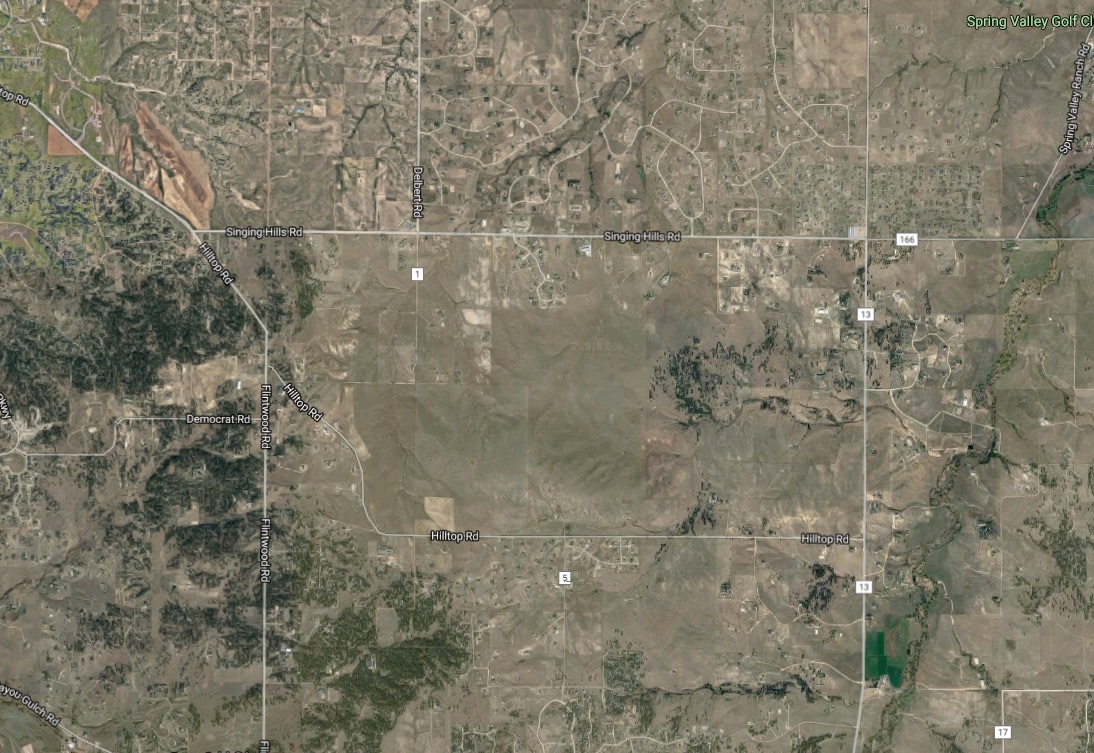
This image is a merge of the “existing level of service” and “new connections” graphs from the transportation master plan, plus two diagonal connections that would improve inter-county transit times.

(click to enlarge)

Transportation plan, existing level of service, planned new connections, unplanned diagonal connections needed

1) The great majority of new connections are East-West routes within the county.

2) North-South routes don’t change much.

3) There are no new connections to points outside Elbert County.

It appears fair to conclude that the plan would facilitate intra-county transportation, but not inter-county transportation with our neighbors. Therefore;

1) The plan is not designed to bring this portion of Elbert County into a more integrated regional transportation network and appears to violate the purpose of creating a component of a larger regional transportation plan construct.

2) The plan does not promote economic integration between this portion of Elbert County and its’ three neighboring counties.

3) By not improving linkages to surrounding counties the plan preserves the economic isolation of Elbert County from neighboring counties. This indicates that the “socioeconomic trend” in this section of Elbert County is to remain a bedroom community. The plan’s intent to spend $1.5 billion dollars to build out and pave road infrastructure seems inconsistent with economic isolation.

the natural state of mankind

Happy Father’s Day June 16, 2008 Sunset

“Whatsoever therefore is consequent to a time of Warre, where every man is Enemy to every man; the same is consequent to the time, wherein men live without other security, than what their own strength, and their own invention shall furnish them withall. In such condition, there is no place for Industry; because the fruit thereof is uncertain; and consequently no Culture of the Earth; no Navigation, nor use of the commodities that may be imported by Sea; no commodious Building; no Instruments of moving, and removing such things as require much force; no Knowledge of the face of the Earth; no account of Time; no Arts; no Letters; no Society; and which is worst of all, continuall feare, and danger of violent death; And the life of man, solitary, poore, nasty, brutish, and short [and colorful].”

Thomas Hobbes, Leviathan, 1651.

The no-growth crowd may love their mythological state of nature, but all that proves is they’ve never lived in it.

the “dead hand” of land control

See: Conservation Easements_ The Good, the Bad, and the Ugly.pdf

See: Rule Against Perpetuities

See: The Nature Conservancy Consolidated Financial Statements for 2007 and 2006

excerpt: The Nature Conservancy Consolidated Statement of Activities

In their last fiscal year, the Nature Conservancy sold over $260 Million worth of conservation land and easements to governments. Government officials like this method for gaining control of private land because they can do it without the public notices involved with planning and zoning land use changes.

See: Bijou Creek government purchase

See: Colorado Land Trusts

Also See:

February 21, 2008

Conservation Easements in Perpetuity are for a Long, Long Time

By Clarice Ryan (more…)

planning for gaia

RE: Balderdash! Buncombe! BS!

(Correspondence, emails in sequence from bottom up)

(more…)

transportation master plan draft

West Elbert County Transportation Master Plan May 8th Draft
West Elbert County Transportation Master Plan May 8th Appendices

These documents are available on the county web site. I saved them here in case they get removed from the county site.

On the whole, it looks like the plan creates more beneficiaries than those negatively impacted. A good deal of property stands to be reallocated to transportation, however, and the plan would gain considerable authority if it were put before the voters for adoption. Whichever way the vote went, many fights would be avoided.

I’m a little surprised the plan did not propose any major diagonal arterials into the Springs and Denver to facilitate commuting. A great way to “foster the rural quality of life so important to Elbert County citizens” (Community Vision Statement, pg. 3-5.) would be to have those citizens spend less time on zig-zag roads commuting to and from town.

self-ownership (the basis of property rights) and voluntary arrangements

Liberty Is Worth the Abuse

Daily Article | Posted on 5/29/2008 by Gary Galles

We get a lot of abuse, those of us who publicly defend private property rights and voluntary arrangements against the varied depredations of government. Having to constantly face such attacks is a substantial part of the cost of speaking out, and probably explains why more people don’t take the risk.

For those who might be considering publicly taking up the cause of “life, liberty, and property,” I offer the following example to give you a taste of what you can expect. (more…)

Balderdash! Buncombe! BS!

An Abe21 unsigned opinion, collected 5/21/08, since taken down.
The Peoples Master Plan, from an Abe21 unsigned post available 5/21/08, since removed
————————————————————————————————————————-
“The Will of the People[?]”
“What the Citizens want[?]”
“The Collective Persona of the county[?]”

Balderdash! Buncombe! BS!

There is no such thing, entity, common idea, or consensus. The Master Plan is advisory to the Commission precisely because no fictional collective consciousness, however loudly proclaimed by a vocal minority, should ever be binding upon citizens. I don’t care how many consultants and government planners put their expensive hours into writing it, the county Master Plan is not the product of a representative legislature or representative deliberative body. The county Master Plan is the work product of a minority of non-representative, special-interest, squeaky-wheels, who cloak their totalitarian methods in social engineering platitudes, and who use the courts to accomplish what they cannot obtain at the ballot box.

Any judge who upholds their minority plan as binding upon the majority should be run out of town on a rail. No quantity of speculative judicial reasoning can disguise the injustice of holding the majority hostage to the utopian dreams of a special interest minority.

Mr. Thomasson and Democrats of like mind in this, as much as I think the county commission needs diversity, it is issues like this involving the usurpation of fundamental liberties that will lead to the election of a Republican ticket in November.

I encourage the Democrats to propose their utopian visions for voluntary democratic approval at the ballot box, however, forceful impositions of social engineering upon the citizens of Elbert County should be resisted with equal force. Citizens can and will protect their own interests far more effectively than planners ever have or will, and that is the “no-brainer.”
Brooks Imperial