————————————————————————–
IREA hypocrisy
We received the IREA monthly newsletter and it begins by lauding the principle of regulated monopolies for public utilities, and then goes on to dispute many of the public policy regulations being applied to electric utilities in Colorado. While I agree with the economic conclusions IREA makes about alternative energies, it is disingenuous to praise the regulatory state on the one hand, but turn around and condemn it when the regulations go against them. IREA uses the phrase “government manipulations of the electric utility industry” as a pejorative shortly after lavishing praise on the government for “granting exclusive territory” licenses. What the government gives the government can take away, and complaining about it now after enjoying years of monopoly privilege seems just pathetic.
a controlling mentality
The mental state held by planners of state-run economies is a comprehensive view in which all economic actions coordinate with the state. All transactions originate, terminate and are regulated by the state. One sees evidence of this approach in China in that everything built by man for domestic use or consumption, regardless of where you find it, looks the same. From houses to factories to buildings to roads and conveyances, including everything that goes into all of those things, the parts pretty much look the same. The newer houses all face the same direction. The newer roads all run the same grid. The hand of central government planning and control is visible everywhere you look. With so much inertia built up in such a system, only a fool would expect them to change.
This government-centric mentality permeates the current discussion on Yuan revaluation with respect to the dollar. Interestingly, views from both the China state press and the U.S. press seem to assume the rules of a state-run economy. Now, you would expect that view in China, but in the U.S. too? The thinking goes something like, if the Yuan revalues higher against the dollar, Chinese goods will be more expensive to the U.S., the U.S. will as a consequence buy fewer of them, and will instead increase production of those same goods at home.
I doubt things are that cut and dried. On the U.S. side of the Pacific, market pricing still operates in many areas of the non-health care economy. The market will seek a lowest price for a given product and if the Yuan exchange rate forces China to raise prices, other low-cost manufacturers from other places will gladly jump in to provide those products at competitive prices. The reason? They know a market exists for those products at a historically known price.
So, the czarist Obama administration will quickly discover that Yuan revaluation will not have the stimulative effect on U.S. manufacturing they seek. And, as believers in state-run economics, they will subsequently propose wage and price controls for the rest of the U.S. economy because, they will reason, keeping prices high will mean there’s more money at the margin for manufacturers, and this will induce domestic manufacturers to make those products. Wage and price controls will, of course, have the opposite effect and further depress the U.S. economy, however, the czars will simply find something else to blame before moving on to their next foreseeable failure–which will probably involve severe curtailment of private free-market constitutional choices people will be making by then to avoid expensive state-controlled products.
At the rate they’re going, the czarist Obama administration will probably drop the wage and price control turd in the punchbowl sometime around next Christmas. Full totalitarian economic controls? Maybe another couple years.
You know, the propaganda campaigns for this sort of thing have all been done before, so the signposts really stick out if you’re at all looking for them. But, in addition to the injustice, murder and mayhem that leftward totalitarian fascist shifts generally entail, you’d think that being so damn unoriginal would bother these great progressive thinkers. The corruption of power is indeed a powerful drug.
couple observations
A common theme among all manufacturers we met this trip in China, Malaysia and Thailand is the scarcity of labor. Multiple factors contribute to this situation — increases in the standard of living, more job competition giving workers more job choices, more capitalized production methods requiring more trained labor — over time, factors like these reduce the differential cost of labor between less and more developed countries. Low priced foreign goods to American markets, to the extent price is influenced by cheap labor, will become more expensive through natural economic trends. The currency intervention proposed by the Obama administration to make Asian goods more expensive to Americans by fiat is unnecessary and will only further dislocate real value from monetary value.
Another theme we heard from the Thai and Malay is they do not rely upon governmental solutions to support their private market activities. They see reliance on government by private industry as at best a pointless exercise, and at worst a necessary evil. This differs from the views given by the Chinese state newspapers. Their official propaganda reads more like the New York Times and the Washington Post which see government as the primary initiator of economic activity.
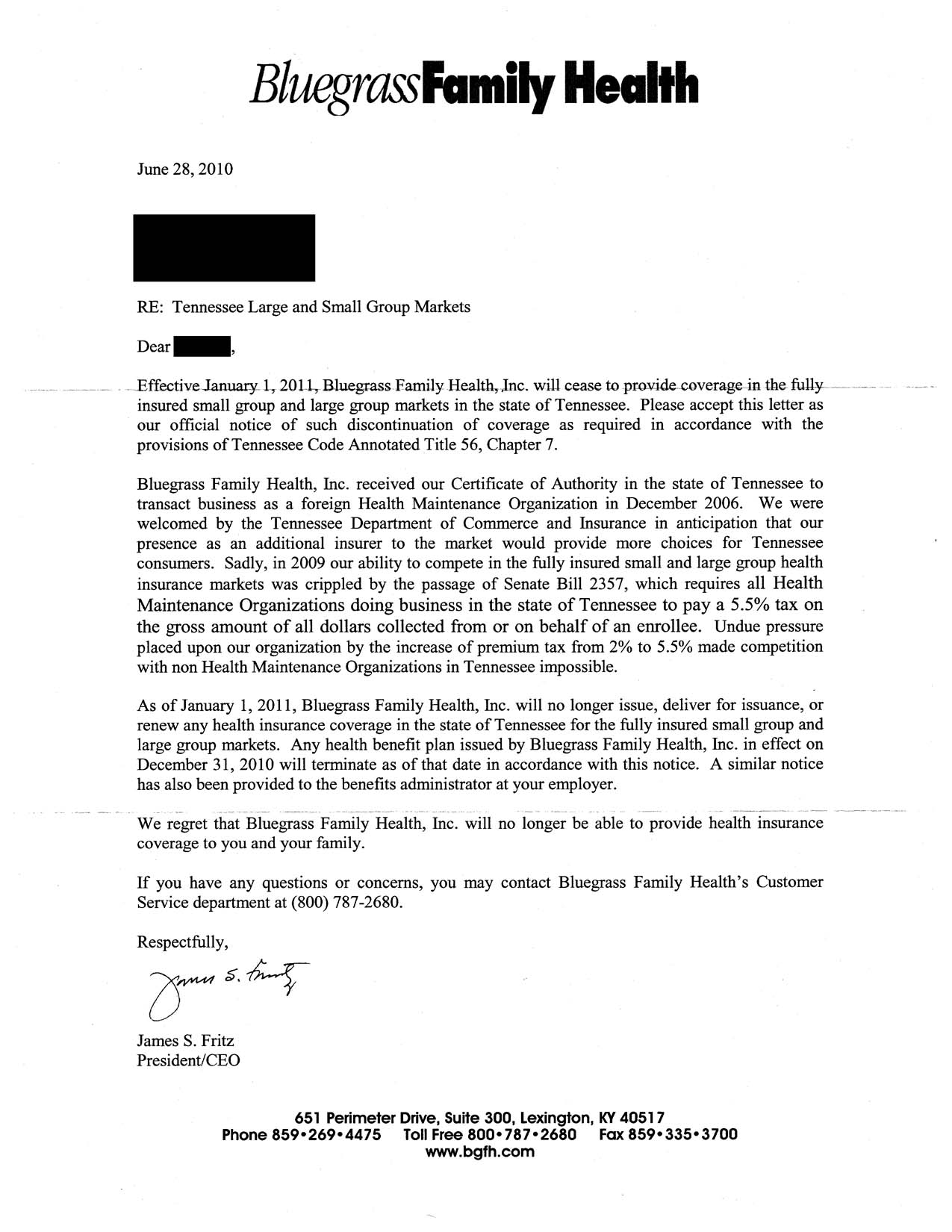
taxes have consequences
Bill Ritter Kills Online Business In Colorado
March 8, 2010 - 7:00am - by Rocky Mountain Right
Amazon.com sent out the following notice to small businesspeople using their online-affilliate program last night:
Dear Colorado-based Amazon Associate:
We are writing from the Amazon Associates Program to inform you that the Colorado government recently enacted a law to impose sales tax regulations on online retailers. The regulations are burdensome and no other state has similar rules. The new regulations do not require online retailers to collect sales tax. Instead, they are clearly intended to increase the compliance burden to a point where online retailers will be induced to “voluntarily” collect Colorado sales tax — a course we won’t take.
We and many others strongly opposed this legislation, known as HB 10-1193, but it was enacted anyway. Regrettably, as a result of the new law, we have decided to stop advertising through Associates based in Colorado. We plan to continue to sell to Colorado residents, however, and will advertise through other channels, including through Associates based in other states.
There is a right way for Colorado to pursue its revenue goals, but this new law is a wrong way. As we repeatedly communicated to Colorado legislators, including those who sponsored and supported the new law, we are not opposed to collecting sales tax within a constitutionally-permissible system applied even-handedly. The US Supreme Court has defined what would be constitutional, and if Colorado would repeal the current law or follow the constitutional approach to collection, we would welcome the opportunity to reinstate Colorado-based Associates.
You may express your views of Colorado’s new law to members of the General Assembly and to Governor Ritter, who signed the bill.
Your Associates account has been closed as of March 8, 2010, and we will no longer pay advertising fees for customers you refer to Amazon.com after that date. Please be assured that all qualifying advertising fees earned prior to March 8, 2010, will be processed and paid in accordance with our regular payment schedule. Based on your account closure date of March 8, any final payments will be paid by May 31, 2010.
We have enjoyed working with you and other Colorado-based participants in the Amazon Associates Program, and wish you all the best in your future.
Best Regards,The Amazon Associates Team
not the party of no
GOP Idea Man Charts Course For Solvency
By GEORGE F. WILL
Posted 02/05/2010 06:25 PM ET
In 2013, when President Mitch Daniels, former Indiana governor, is counting his blessings, at the top of his list will be the name of his vice president: Paul Ryan. The former congressman from Wisconsin will have come to office with ideas for steering the federal government to solvency.
Not that Daniels has ever been bereft of ideas. Under him, Indiana property taxes have been cut 30% and for the first time, Standard & Poor’s has raised the state’s credit rating to AAA.
But in January 2010, Ryan released an updated version of his “Roadmap for America’s Future,” a cure for the most completely predictable major problem that has ever afflicted America.
Some calamities — the 1929 stock market crash, Pearl Harbor, 9/11 — have come like summer lightning, as bolts from the blue. The looming crisis of America’s Ponzi entitlement structure is different. Driven by the demographics of an aging population, its causes, timing and scope are known.
Funding entitlements — especially medical care and pensions for the elderly — requires reinvigorating the economy. Ryan’s map connects three destinations: economic vitality, diminished public debt, and health and retirement security.
To make the economy — on which all else hinges — hum, Ryan proposes tax reform. Masochists would be permitted to continue paying income taxes under the current system. Others could use a radically simplified code, filing a form that fits on a postcard.
It would have just two rates: 10% on incomes up to $100,000 for joint filers and $50,000 for single filers; 25% on higher incomes. There would be no deductions, credits or exclusions, other than the health care tax credit (see below).
Today’s tax system was shaped by sadists who were trying to be nice: Every wrinkle in the code was put there to benefit this or that interest. Since the 1986 tax simplification, the code has been recomplicated more than 14,000 times — more than once a day.
At the 2004 Republican convention, thunderous applause greeted George W. Bush’s statement that the code is “a complicated mess” and a “drag on our economy” and his promise to “reform and simplify” it. But his next paragraphs proposed more complications to incentivize this and that behavior for the greater good.
Ryan would eliminate taxes on interest, capital gains, dividends and death. The corporate income tax, the world’s second highest, would be replaced by an 8.5% business consumption tax. Because this would be about half the average tax burden that other nations place on corporations, U.S. companies would instantly become more competitive — and more able and eager to hire.
Medicare and Social Security would be preserved for those currently receiving benefits, or becoming eligible in the next 10 years (those 55 and older today). Both programs would be made permanently solvent.
Universal access to affordable health care would be guaranteed by refundable tax credits ($2,300 for individuals, $5,700 for families) for purchasing portable coverage in any state. As persons under 55 became Medicare-eligible, they would receive payments averaging $11,000 a year, indexed to inflation and pegged to income, with low-income people receiving more support.
Ryan’s plan would fund medical savings accounts from which low-income people would pay minor out-of-pocket medical expenses. All Americans, regardless of income, would be allowed to establish MSAs — tax-preferred accounts for paying such expenses.
Ryan’s plan would allow workers under 55 the choice of investing more than one-third of their current Social Security taxes in personal retirement accounts similar to the Thrift Savings Plan long available to, and immensely popular with, federal employees. This investment would be inheritable property, guaranteeing that individuals will never lose the ability to dispose every dollar they put into these accounts.
Ryan would raise the retirement age. If, when Congress created Social Security in 1935, it had indexed the retirement age (then 65) to life expectancy, today the age would be in the mid-70s. The system was never intended to do what it is doing — subsidizing retirements that extend from one-third to one-half of retirees’ adult lives.
Compare Ryan’s lucid map to the Democrats’ impenetrable labyrinth of health care legislation. Republicans are frequently criticized as “the party of no.” But because most new ideas are injurious, rejection is an important function in politics. It is, however, insufficient.
Fortunately, Ryan, assisted by Republican representatives Devin Nunes of California and Jeb Hensarling of Texas, has become a think tank, refuting the idea that Republicans lack ideas.
http://www.investors.com/NewsAndAnalysis/ArticlePrint.aspx?id=520346
econoclasts
|
|
September 2009
Book of the Month
Dear Reader: “This is the book Americans need to read now, as our leaders rush forward to deal with the present crisis without consulting the lessons of the past.” That’s what Larry Kudlow of CNBC just wrote about ISI’s Book of the Month for September, the pioneering history ECONOCLASTS: The Rebels Who Sparked the Supply-Side Revolution and Restored American Prosperity—which you can now order at a 40% discount. Kudlow is exactly right. Historian Brian Domitrovic reveals the blueprint for solving economic crisis—and conclusively demonstrates why the government’s frantic interventions in the economy are a recipe for disaster. That’s why Amity Shlaes, acclaimed historian of the Great Depression, has said that ECONOCLASTS “couldn’t be more timely.” It’s also a marvelous read, and I’m thrilled to make it available you at this special discount. Enjoy! Best, Jed Donahue Econoclasts: |
it’s all about the O
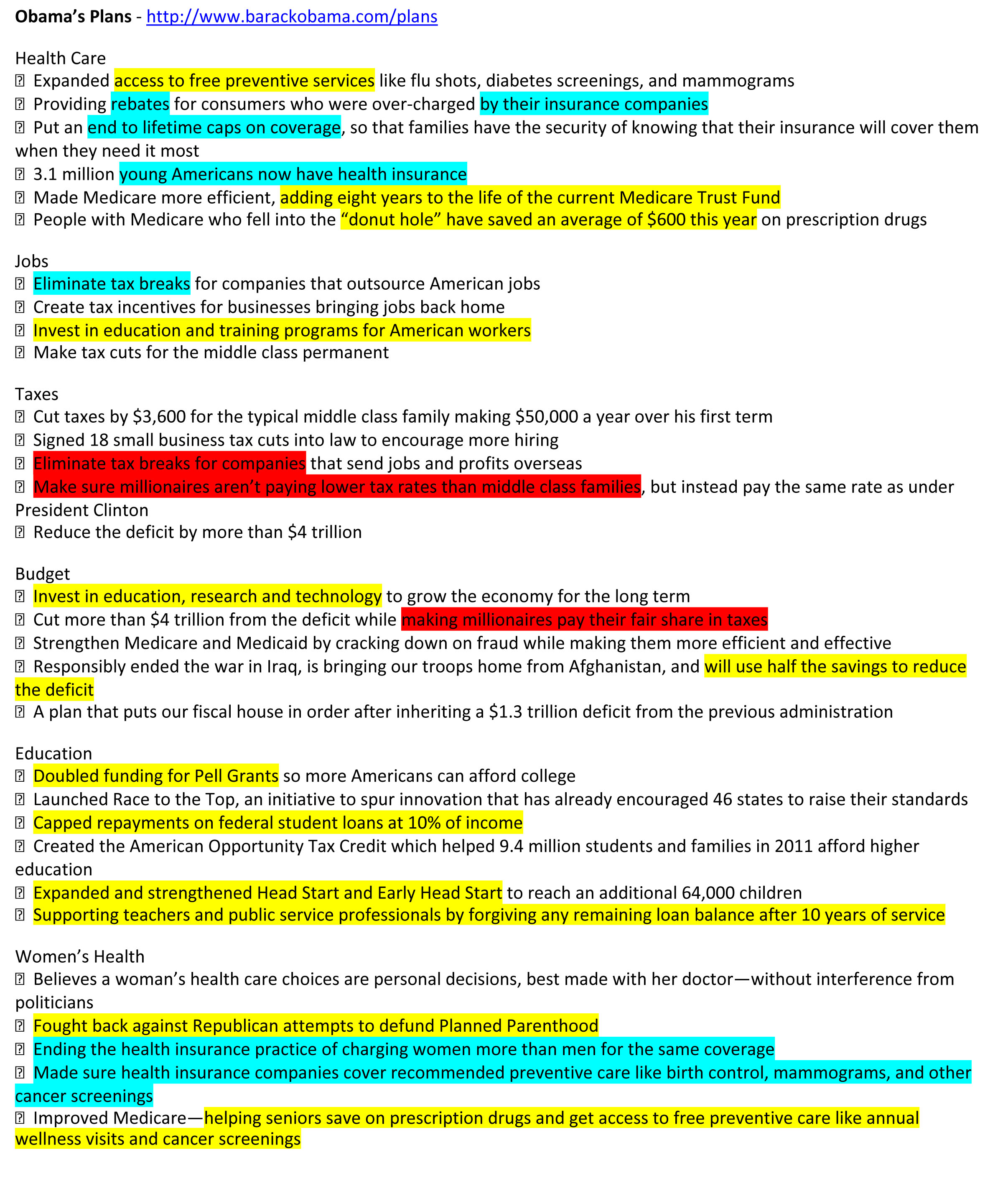
Obamanomics: Part One, The Hidden Agenda
Obamanomics: Part Two, The Hidden Agenda
Obamanomics: Part Three, In Defense of Capitalism
7/11/09 ECR Breakfast Forum
(Links to brief YouTube clips)
Colorado State Senator Greg Brophy
Mountain States Legal Foundation Executive Director William Perry Pendley
a crock
Our old crock pot gave up the ghost after 20 years and we bought a new one. I’m still counting the improvements in crock pot technology that 20 years of free market competition yielded for less money than the original.
- a slim oval design
- glass lid with vent holes
- ergonomic lid handle with a spoon carrier
- built-in silicon lid gasket
- transport clips for locking the lid down for trips to pot lucks
- removable spoon drip tray
- bracket for holding the hot lid which also spins around to provide a cord wrap structure
- easily cleanable aluminum housing
- lighter weight heating element
- flip up silicon handles for secure handling
- 3 stage heating element
No doubt these many improvements did not come from one source. They came about from multiple innovations by many companies competing to win customers in the free crock pot market.
Imagine how many of these innovations would not have occurred in a government-controlled crock pot market. Imagine how the absence of competition coupled with the presence of federal oversight and regulation would have cemented that 20 year-old crock pot design into our culture.
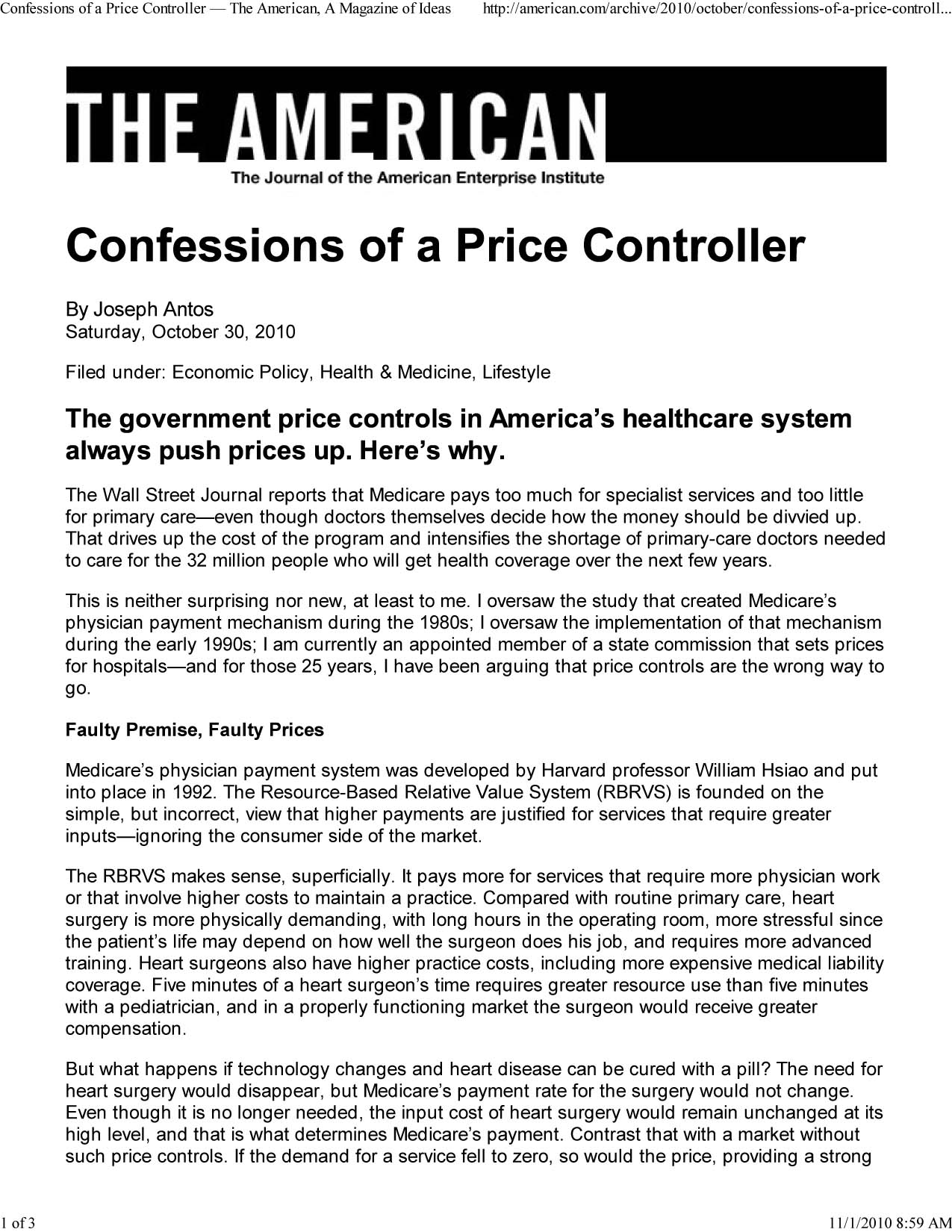
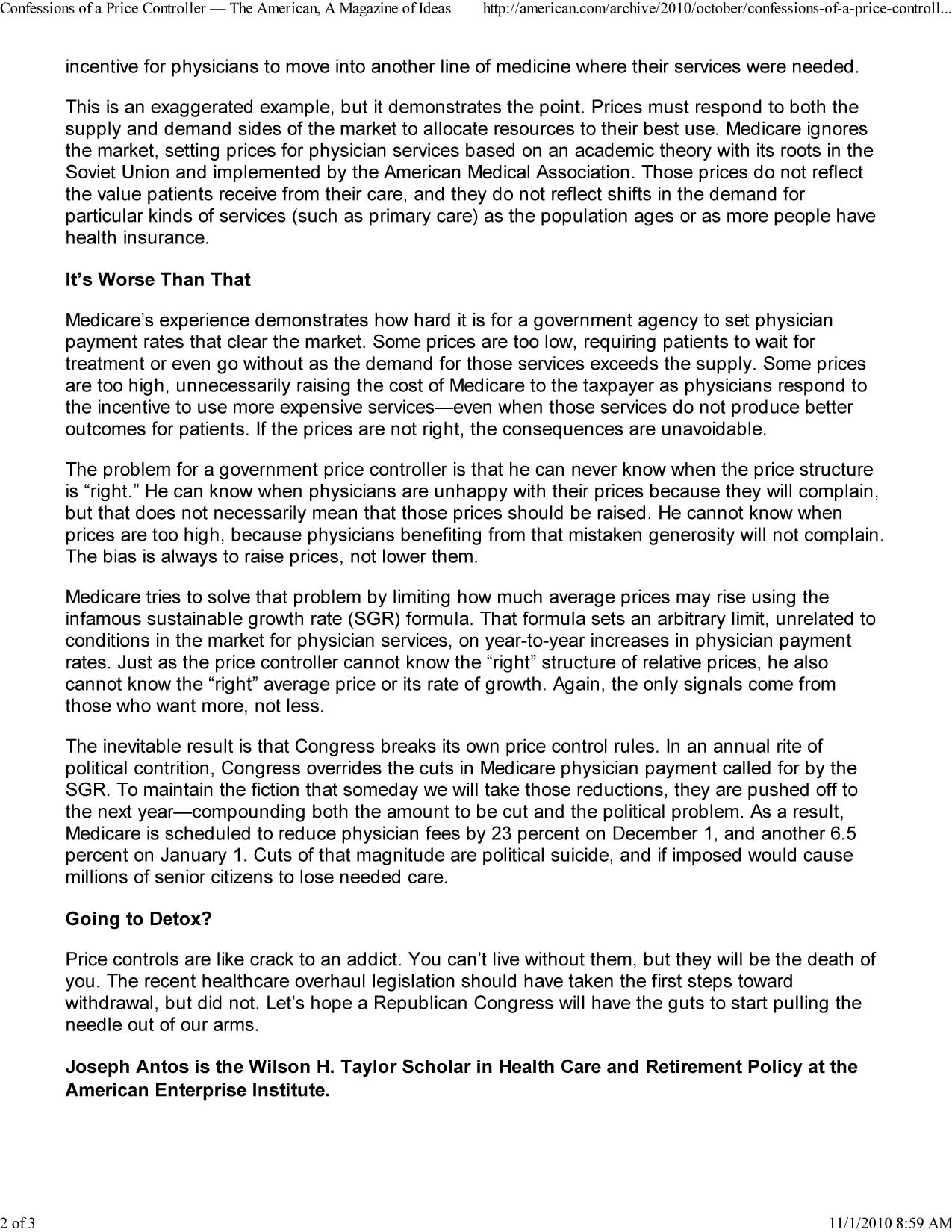
Consider the medicare-subsidized and fda-regulated health care industry in America, or the new federally-managed American automobile industry. Consider driving a 50-year-old Chevy on the island of Cuba.
Governments don’t adapt very well. It’s not in their nature.
The problem with the left’s legislative agenda for America, which they seem unable to adequately describe in less than a thousand pages of federal spaghetti-legalize, is we’ll never know all of the wonderful human products, behaviors, solutions, and creativity that they preclude from coming into existence.
blowback
“Because white guilt is a vacuum of moral authority, it makes the moral authority of whites and the legitimacy of American institutions contingent on proving a negative: that they are not racist. The great power of white guilt comes from the fact that it functions by stigma, like racism itself. Whites and American institutions are stigmatized as racist until they prove otherwise. . . . .[T]he larger reality is that white guilt leaves no room for moral choice; it does not depend on the goodwill or the genuine decency of people.” Shelby Steele, White Guilt, 2006.
The moral authority that comes from an absence of moral choice is actually no moral authority. This is a prescription for endless manipulation–by both blacks and whites–which Steele documents at length. He also wrote, (more…)
Bound to Burn
“If we’re truly worried about carbon, we must instead approach it as if the emissions originated in an annual eruption of Mount Krakatoa. Don’t try to persuade the volcano to sign a treaty promising to stop. Focus instead on what might be done to protect and promote the planet’s carbon sinks—the systems that suck carbon back out of the air and bury it.”