

Archives for October 2012
solve the problem
RE: 10-30-2012 Oil and Gas Committee Meeting, last night was definitely a trip to the sausage factory. Will I ever taste those delicious sizzling patties quite the same way?
At the risk of over simplification, since the last meeting in August, planners have moved off of their 65 page opus of new zoning law as the preferred vehicle for regulating oil and gas development. And they’ve considered and moved off from establishing a memorandum of understanding [MOU] with the Colorado Oil and Gas Conservation Commission [COGCC], the state regulatory agency.
Rather than use county zoning law, or state regulatory law, to control this industry, they’ve decided to write MOU’s directly between the county and oil and gas developers. They still plan to put all the same regulatory requirements into each deal as had been anticipated in the draft zoning documents. Now, however, those details will be contractual rather than regulatory.
Moreover, the details may attract less public attention because they won’t be written into law. They’ll be handled by attachments to boiler plate MOU contract language that will come out of private negotiations between developers and the county.
A regulatory distinction without a difference you might say, and I would agree. From a property holder’s perspective, would a government taking under the 5th Am. be any less of one if enforced through a contractual process required to receive a permit to exploit minerals, rather than through a zoning law containing much the same language?
Here are the working documents under discussion at the meeting.
~
Now to my issue. If the purpose of regulating oil and gas is to protect the environment of health, safety and welfare of Elbert County citizens and their property, none of this scheherazade dance of the seven veils accomplishes that.
Ground water property can only be protected through the doctrine of beneficial use. That means you have to use it before you can defend your property right against someone else damaging it. For example, we have 4 aquifers under our land with water in them. We only use water from one of them at about 300 feet down. There are 3 more aquifers underneath us that contain much more water, all of it, theoretically, belonging to us too.
We could even get the Colorado State Engineer to issue a Determination of Water Rights that would say how much water those aquifers theoretically contain. Of course an open question on water determinations is whether future recovery methods will increase water reserve estimates, as they have all other mineral deposits in the ground, and should one get locked into a state allocation based on recovery methods predicated on old technology?
Anyway, with a state-granted water right determination in hand, we could actually sell an interest in those theoretical properties if someone wanted to buy it. But unless we were to drill a well into those deeper aquifers and actually use that water, the ownership of that water is entirely theoretical and without a means to defend in court.
If someone were to extract water from a neighboring property out of one of those aquifers, and that extraction were to damage our water property interest in that same aquifer, unless we were also using water from that aquifer, we would have no way to defend our water property. More importantly, unless we were also using water from that aquifer, we would have no way of knowing that we had been damaged.
So, that’s the doctrine of beneficial use. You have to use it before you can defend it.
“Beneficial use” doctrine encourages the economic use of water. It assumes that when the water comes out of the ground, it will serve our society under the guiding hand of one user or another. Either way, the water is still good for use. This doctrine, however, is inadequate to protect water quality while it remains untapped in the ground and subject to risk of contamination.
Whether the regulatory vehicle for delivering the above environmental protection law turns out to be zoning or an MOU contract, remedial efforts for ground water contamination will only potentially commence after evidence of damage is presented. Only existing beneficial users of water will be able to show evidence of damage. Therefore, only existing beneficial users of water will have enforcement protection under this regulatory scheme.
Every foreseeable oil and gas well in this region will penetrate all existing water aquifers. Fracturing of those wells will occur deep in the ground, far removed from water supplies. There’s no foreseeable risk of water contamination from that process. Whatever risks exist to water, they exist from the vertical cased section of each well at depths in the vicinity of the water aquifers.
Even though all aquifers will be penetrated by each oil well, only the aquifers that currently have water wells into them will be tested for contamination. And only a positive test for water contamination can enliven a remedial process, or some sort of compensation back to the water-owning injured party.
How much water remains in the ground in untapped aquifers is a question for the Colorado State Engineer. I’m sure it’s not an easy question to answer, however, my gut tells me it’s a lot. In our case, we have much larger theoretical reserves in our deep aquifers that have never been tapped than we have in the aquifer we drink out of. Since only large agencies such as towns and subdivisions with central water systems can afford to drill into those deep aquifers, and since most of Elbert County is not populated with towns and subdivisions, it is fair to say that our water aquifer profile of usage is probably typical.
So it’s reasonable to conclude that the majority of water in the ground is not currently tapped. Under the proposed regulations, this majority of water in the ground will never be tested for contamination. We will never know if that water quality has been negatively impacted until some time in the future when the economics of recovering deeper water have changed, or when a real need arises to recover that deeper water.
Planners and regulators are putting window dressing on this problem with a water testing protocol that only looks at existing beneficial users – existing water wells in the vicinity of a vertical oil and gas well bore.
There’s a disconnect here. The proposed regulatory schemes have no reality feedback mechanism to inform us about whether or not they succeed in protecting the majority of our water in untested aquifers. Best Management Practices [BMP] for drilling must be accepted on faith alone.
You see this sort of thing a lot in government – untested outcomes – and it is one of the reasons government is always the last place you look for a real solution.
It doesn’t take an expert to recognize the disconnect, identify the problem, and understand that our regulatory scheme does not solve it. One planner described to me last night how they do the best they can with limited information. Well, that’s nice as far as it goes. But doing the best you can, while acknowledging that you have inadequate information to assure success, seems to me a good argument for going back to the drawing board to come up with a better plan that addresses the nature of the real problem.
If the nature of solving this energy exploration problem, with scientifically demonstrable measures necessary to monitor successful performance in place, means that the process becomes more expensive, then that is the nature of the problem to solve.
Solving a different problem, i.e. testing for negative impacts in a small minority of places – where the testing is least expensive – as a method to prove out the general viability of the process at large, seems to be wishful thinking in the extreme. Contamination problems, if they come to exist, will not direct themselves to the most convenient test sites.
This is willful blindness.
I’m sure a testing protocol could be devised to adequately monitor drilling and production integrity through all of the impacted aquifers in the region of each well bore. To the Oil and Gas Committee, I say go back to the drawing board and solve the real problem. Don’t hand us a mess of government legalese to paper over a premature solution.
B_Imperial
EHS Cardinal Pride Marching Band at State

Pikes Peak

good evening

educated fools
“Hayek, more than anyone else, illuminated the knowledge problem. Simply put: No one person can ever know enough. Planners who think they can process all of the data from disparate sources across vast expanses of geography and culture are, quite simply, educated fools. The planners of the New Deal had convinced themselves that they were smart enough to grind out any problem so long as they had enough data. Worse, in their contempt for the “disorganized” character of capitalism, they were deeply hostile to markets and the informational power of prices. When prices went in the wrong direction the New Dealers took it upon themselves to out think the market. Hence the great pig slaughter of September 1933, when the government ordered the killing of six million pigs in a time of deprivation.”Jonah Goldberg, The Tyranny Of Clichés, 2012.
The aggregate opportunity cost of planning since the New Deal — the economic value of what has been foregone in service of the planning myth net of actual economic benefit — we’ll never know. My guess is it’s a staggering number, moreover, in return for this loss, planning benefits have unjustly accrued to non-stakeholders on a largely random basis.
Planning is a game with winners and losers, and a playing field controlled by unvested planners. What could go wrong?
B_Imperial
Romney at Red Rocks tonight
From the Denver Post tonight, “in an e-mail statement sent out after Romney’s rally, Obama campaign spokeswoman Lis Smith said, “The Mitt Romney we saw tonight in Colorado was dour, defensive, and dishonest …”
Yeah right.

poll watchers needed


weekend evenings


a class act
You might be a racist
fracking frenzies
Longmont Is Ground Zero In War Over Fracking
By Vincent Carroll
The Denver Post
10/17/2012
If you haven’t seen the video of anti-fracking protesters hectoring Gov. John Hickenlooper in Longmont last month and then thrusting signs against his car, you should Google it to get an idea of the passion behind the movement — here and nationally — to outlaw hydraulic fracturing for oil and natural gas. [Read more…]
Economic Indicators
Economic Indicators, September 2012
Economic Indicators – All Years
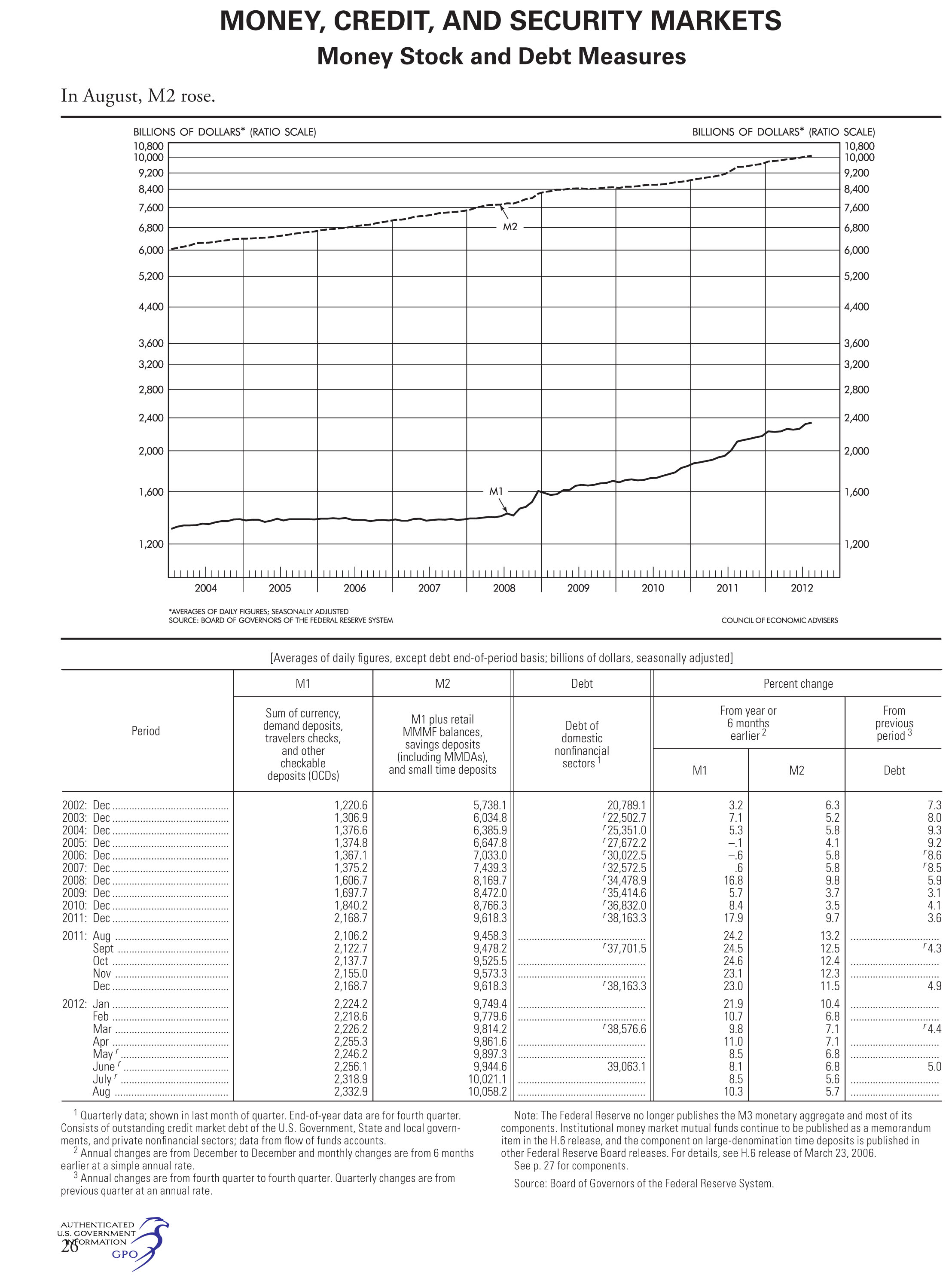
Look at the growth in the money supply under the Obama administration. Look at the percentage increases under Obama compared to the Bush years. Obama has been hyper-inflating money supply to fund his economy of social justice. Continued travel down this economic path will bring the whole thing crashing down. It’s an open question whether Obama is even aware of the damage he’s done. After 4 years of not learning how to run this country, our only recourse is to vote him out.
B_Imperial
A moral right
Cardinal Pride Marching Band
one way street of progress
Jonah Goldberg, The Tyranny of Cliches, 2012.
From the Introduction:
“One small example: During the recent debate over reforming Medicare, many liberals insisted that any backsliding amounted to a sacrilegious violation of a fundamental “covenant.” Writing in The New Republic, Jonathan Cohn, a leading health care expert, quotes LBJ’s Medicare law signing statement:
“No longer will older Americans be denied the healing miracle of modern medicine.” Johnson said at the signing ceremony. “No longer will illness crush and destroy the savings that they have so carefully put away over a lifetime so that they might enjoy dignity in their later years.”
“Read those quotes carefully,” Cohn advises us, “because they spell out the covenant that Johnson made with the American people on that day: A promise that the elderly and (certain groups) of the poor would get comprehensive medical insurance, no matter what.” Now I cannot and will not criticize Cohn for believing that the government should ensure that the truly needy and elderly receive medical care. That is an honorable, intellectually defensible position. Though I should at least mention that wanting the needy to receive health care does not necessarily require a vast expansion of the federal government. But my point isn’t to debate the means to a desirable end.
No, the reason why I find Cohn’s argument so useful is that it illustrates the progressive mind-set so perfectly. [Read more…]
What Israel is.
Danny Danon, Israel – The Will To Prevail, 2012.
“Israel is the one hundredth smallest country in the world, home to less than 1/1000th of the world’s population with just 7.1 million people. Its $100 billion economy is larger than all of its immediate neighbors combined. Israel has the highest average living standards in the Middle East. Israel has the highest number of university degrees per capita among working people, ranking third in the industrialized world after the United States and Holland. It also has the highest number of museums, orchestras, and zoos per capita. Israel produces more scientific papers per capita than any other nation by a large margin – 109 per 10,000 people—and also has one of the highest per capita rates of patents filed. [Read more…]
“Law is a human institution.”
A Lawyer by Training, Obama Ignores Rules of Law
A Commentary By Michael Barone
Thursday, October 11, 2012
“The Illegal-Donor Loophole” is the headline of a Daily Beast story by Peter Schweizer of the conservative Government Accountability Institute and Peter Boyer, former reporter at The New Yorker and The New York Times.
The article tells how Obama.com, a website owned by an Obama fundraiser who lives in China but has visited the Obama White House 11 times, sends solicitations mostly to foreign email addresses and links to the Obama campaign website’s donation page.
The Obama website, unlike those of most campaigns, doesn’t ask for the three- or four-digit credit card verification number. That makes it easier for donors to use fictitious names and addresses to send money in.
Campaigns aren’t allowed to accept donations from foreigners. But it looks like the Obama campaign has made it easier for them to slip money in. How much foreign money has come into the Obama campaign? Schweizer and Boyer say there’s no way to know.
The campaign — as my former boss, pollster Peter Hart, likes to say — always reflects the candidate. A campaign willing to skirt the law or abet violations of it reflects a candidate who, as president, has been doing the same thing. [Read more…]
mornings


Church and state
“If Rowland’s church is actively promoting a candidate or a party, then its participation should be questioned because it is in violation of the Constitution.” William C. Thomas
Wrong. A church so engaged may violate a tax regulation, but it’s definitely not violating the Constitution. Mr. Thomas, like many liberals, forgets that the Constitution, including the Amendments such as those in the Bill of Rights consist of negative laws against government power. Constitutional limitations on government powers, by default, create the free domain in which citizens, and yes, even citizens acting in legal organizations like churches and corporations, may exercise their freedom.
Seems like liberals like to think that the Constitution mandates certain behavior. They seem to always be searching for a constitutional justification to force one of their notions upon the country. They fundamentally don’t seem to understand how freedom works. Our Constitution sets the boundaries for government, the rest of what we do is up to us. Maybe, since they don’t seem to understand freedom, that’s why they don’t seem to understand how so much of what they promote actually damages our freedom. They don’t get that by growing laws, they actually shrink our free domain.
The 1st Am. limits what government can do with regard to religion. “Congress shall make no law…” The 1st Am. simply does not limit what people can do in their own religious interest.
One more thing, constitutional amendments modify and supersede language in the body of the Constitution. If an amendment exists on the subject, that’s where the analysis should begin. Mr. Thomas can’t cut and paste the Constitution to find a bit of language to support his case. Well, I suppose he can…. but it’s not going to be very persuasive.
B_Imperial